
"Central and South America"
1000 article(s) found

Stories and legends of Antigua Coffee beans in Guatemala Coffee Culture of Central and South America
Palate: rich aroma, sour grape tropical fruit, full and mellow ta's unique charm explains the sweetness of Guatemala, ta will make you feel comfortable with all the coffee beans, ta, will make you completely crazy about ta and fascinated by ta, which is unique to Antigua.
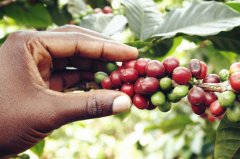
Guatemala Coffee production area of Central and South America
Full-bodied and fruity, with aromas of spices and tobacco. Lots of alively fruity kind of acidity distinctive aroma, spicy / smokey flavor good body. Antigua is bordered by Mexico in the north. Like Tarasu in Costa Rica, located in Antigua, southwest of Guatemala, coffee is grown on the slopes of the hinterland of the volcano.

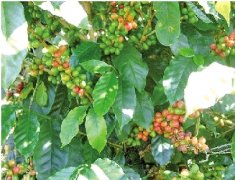
High quality imported santa rita from Santa Rita, Colombia, Central and South America
Colombia Santa Rita Special Reserve country: Colombia: Antioquia: altitude: 1600-2100 m treatment: washed varieties: Kaduai, Kaddura Manor: Santa Rita flavor: sugar, clean, medium alcohol thickness
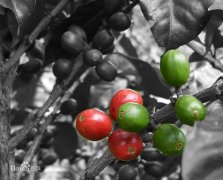
Guatemalan boutique coffee characteristics of Central and South America
Guatemala (Guatemala) aroma 3.5 minutes brightness 4.5 minutes mellow 3.5 minutes flavor 4.5 minutes aftertaste 4.5 points suitable for baking: Light/Medial/City shallow roasting, city degree can best show the characteristics of Guatemalan coffee, too deep will reduce the fruit flavor, if you like the smoky flavor, you can bake close to the second explosion, but still do not enter the second explosion as the principle. By

The delicious coffee producing countries of North and South America and Guatemala introduce the processing methods of fine coffee.
Guatemala is located in the center of North and South America, and its geographical location occupies an important position in Central America. Guatemala covers an area of about 108899 square kilometers. The land features can be divided into plateau volcanoes, lowland tropical forests, volcanic sandy shore plains along the Pacific coast, and virgin lands along the Caribbean Sea. The SierraMadre Mountains of Central America span east and west of Guatemala, covering an area of
Coffee beans in Central and South America Colombian flavor coffee
Columbia Coffee Columbia Coffee (Cafe de Colombia), which originated in Colombia, is one of the few individual coffees sold in the world under the name of the country. In terms of quality, it has won praise unmatched by other coffee. Compared with other producing countries, Colombia is more concerned with developing products and promoting production. It is this point, coupled with its superior geographical conditions and climatic conditions.

Coffee from Central and South America, the birthplace of Ethiopian coffee
Coffee trees come from Ethiopia, from wild coffee forests and semi-developed land to traditionally operated plots of land to modern plantations. About 50% of the coffee is grown more than 1500 meters above sea level. The flavor of Ethiopian coffee is difficult to describe. It is neither strong nor sour. Therefore, it is not suitable for deep baking, otherwise it is easy to lose.

The main origin of coffee is South America. What are the coffee producing countries in South America? The three largest coffees in the world
Professional coffee knowledge exchange more coffee bean information please follow the coffee workshop (Wechat official account cafe_style) the main origin of coffee in South America, which coffee producing countries in South America? What are the three major coffee producing areas in the world? In 1718, the Dutch first brought some coffee to Surinam on the northeast coast of South America.

Waiqiang Plateau Coffee Manor Central and South America
High-quality coffee beans are refined by water treatment. The coffee beans with less impurities can be obtained by the water washing method, but if the water quality and time are not properly controlled during the fermentation process, the coffee beans will easily be infected with the sour taste of excessive fermentation. and dry beans also need to pay attention to timely re-inspection to prevent coffee beans from being contaminated by wet ground and sundries. Processed
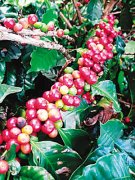
Peruvian Coffee Flavor in Central and South America
Peru has good economic conditions and a stable political situation, thus ensuring the good quality of coffee. However, there are many local problems, in addition to guerrilla warfare and drug trafficking, the emergence of cholera along the coast in the mid-1990s led to a further economic depression, and what is more, the annual inflation rate reached 7000%. In the mid-1970s, Peru produced about 9 percent of its coffee a year.

An introduction to the coffee producing countries of Honduras in the mountainous countries of Central and North America
Honduras is a mountainous country in Central and North America, with a population of more than 8.3 million and an area of about 112000 square kilometers. Located in the north of Central America. It is bordered by the Caribbean Sea to the north, the Gulf of Fonseca in the Pacific Ocean to the south, Nicaragua and El Salvador to the east and south, and Guatemala to the west. More than 3/4 of the territory are mountains and plateaus. The mountains extend from west to east, inland is a lava plateau, mountainous
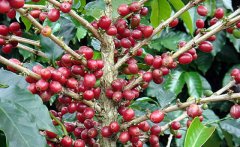
South African coffee is fragrant with less acidity, reminiscent of Central American coffee beans
It is fragrant with less acidity, reminiscent of coffee beans from Central America. Coffee production in South Africa (SouthAfrica) is mainly in the northeast of the country, from Natal between Transvaal and Mozambique, extending northward to Transvaal, with a southernmost limit of latitude 30 south. Further south, coffee cannot be grown due to the harm of early frost.
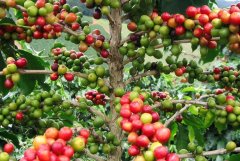
South African coffee is fragrant with less acidity, reminiscent of Central American coffee beans
It is fragrant with less acidity, reminiscent of coffee beans from Central America. Coffee production in South Africa (SouthAfrica) is mainly in the northeast of the country, from Natal between Transvaal and Mozambique, extending northward to Transvaal, with a southernmost limit of latitude 30 south. Further south, coffee cannot be grown due to the harm of early frost.
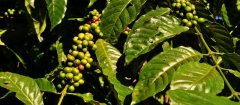
South Africa is fragrant with less acidity, reminiscent of Central American coffee beans
It is fragrant with less acidity, reminiscent of coffee beans from Central America. Coffee production in South Africa (SouthAfrica) is mainly in the northeast of the country, from Natal between Transvaal and Mozambique, extending northward to Transvaal, with a southernmost limit of latitude 30 south. Further south, coffee cannot be grown due to the harm of early frost.

Coffee futures prices fell to a 13-year low, but production cuts in Central and South America led to a rebound in prices
Professional coffee knowledge exchange more coffee bean information Please follow the coffee workshop (Wechat official account cafe_style) Coffee futures prices have fallen to the lowest since 2006, as coffee futures prices have fallen to their lowest level since 2006, there will be more bad news in the coffee market. According to Bloomberg, the problem stems from global oversupply, which is largely due to

A detailed introduction to the cultivation of Coffee Manors in Central America
Central America knows Central America Coffee Central America is the land bridge connecting North and South America. There are seven countries, namely, Belize, Costa Rica, El Salvador, Guatemala, Honduras, Nicaragua and Panama. Seven Central American countries all produce coffee, with Guatemala, Costa Rica and Honduras among the top 10 coffee exporters in the world. Coffee began to flourish in Central America
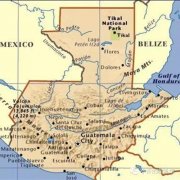
World Coffee Tour A big coffee producer in Guatemala and Central America
Guatemala is a big coffee producer in Central America, ranking eighth in the world in terms of output. Guatemala, whose name comes from the Mayan language, means thelandofmanytrees, the country of the forest. Located in Central America, it is known as the pearl in the crown of China and the United States. Although Guatemala has a limited land area, it has a rich and diverse climate. A country famous for lakes and volcanoes, volcanic soil,
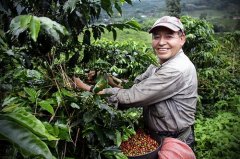
The taste is fragrant with less acidity, reminiscent of the South African flavor of Central American coffee beans.
It is fragrant with less acidity, reminiscent of coffee beans from Central America. Coffee production in South Africa (SouthAfrica) is mainly in the northeast of the country, from Natal between Transvaal and Mozambique, extending northward to Transvaal, with a southernmost limit of latitude 30 south. Further south, coffee cannot be grown due to the harm of early frost.

Introduction to Honduran coffee beans located in northern Central America San Juan Cido San Barra Estate
Honduras is a mountainous country in Central and North America with a population of more than 8.3 million and an area of about 112,000 square kilometers. Located in northern Central America. It is bordered by the Caribbean Sea to the north, the Gulf of Fonseca in the Pacific Ocean to the south, Nicaragua and El Salvador to the east and south, and Guatemala to the west. More than three-quarters of the territory is mountainous and plateau. Mountains extend from west to east, inland for lava plateau, mountainous